
Last updated October 16, 2026
 Wrought iron
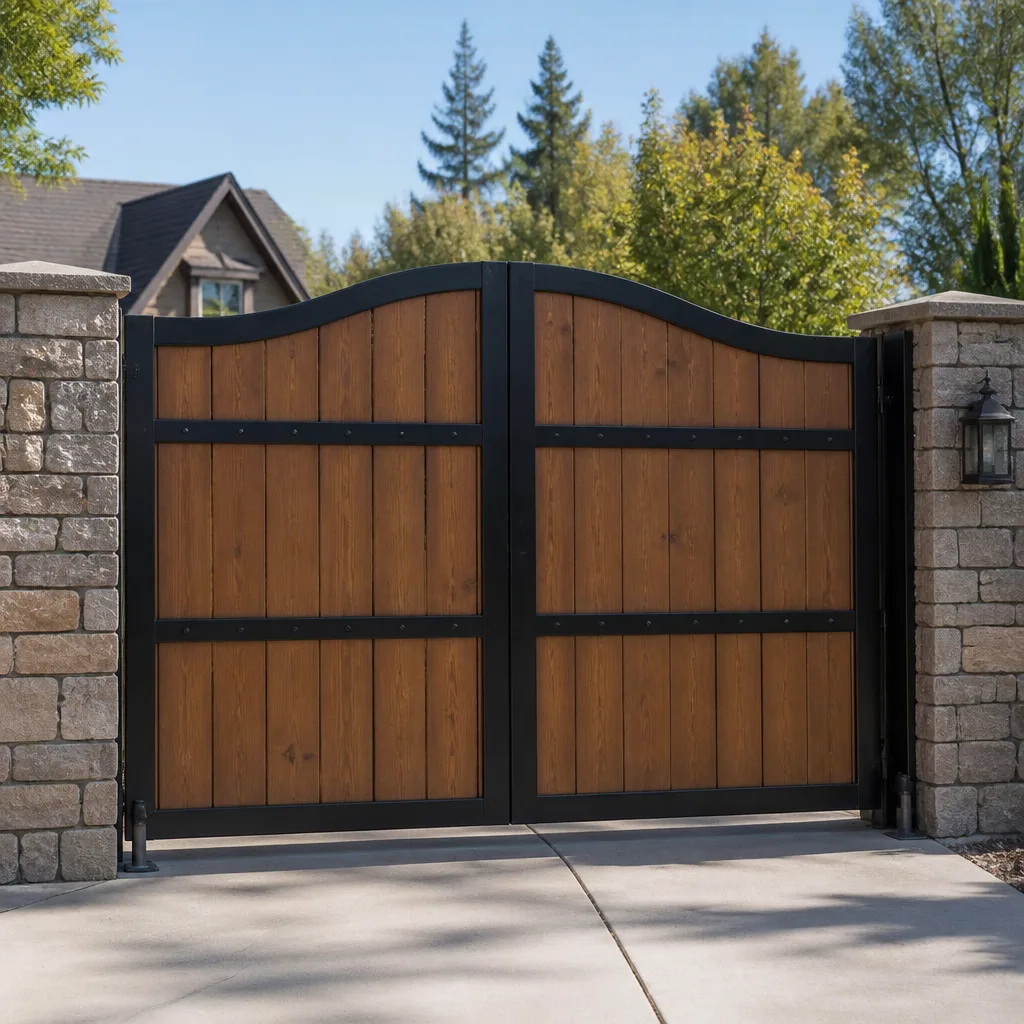 Wood & steel frame
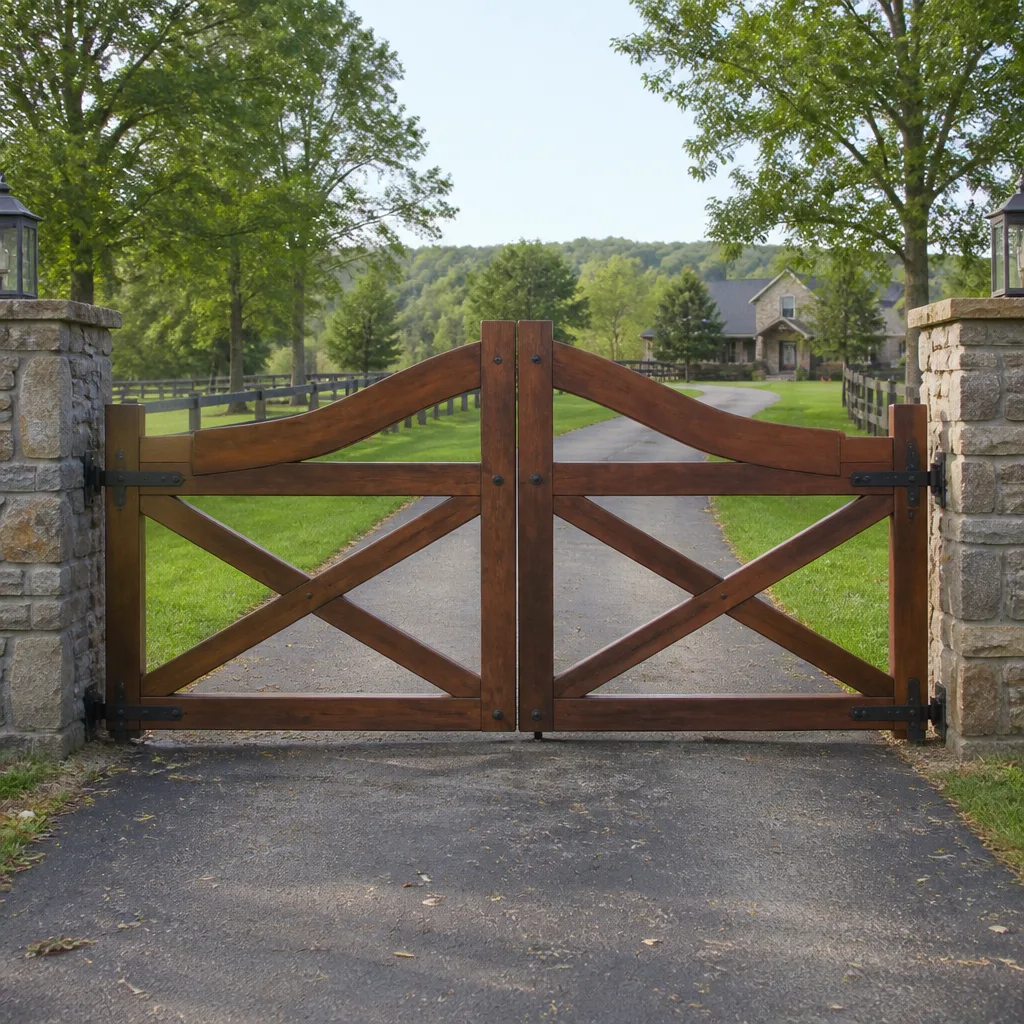 Farm & ranch
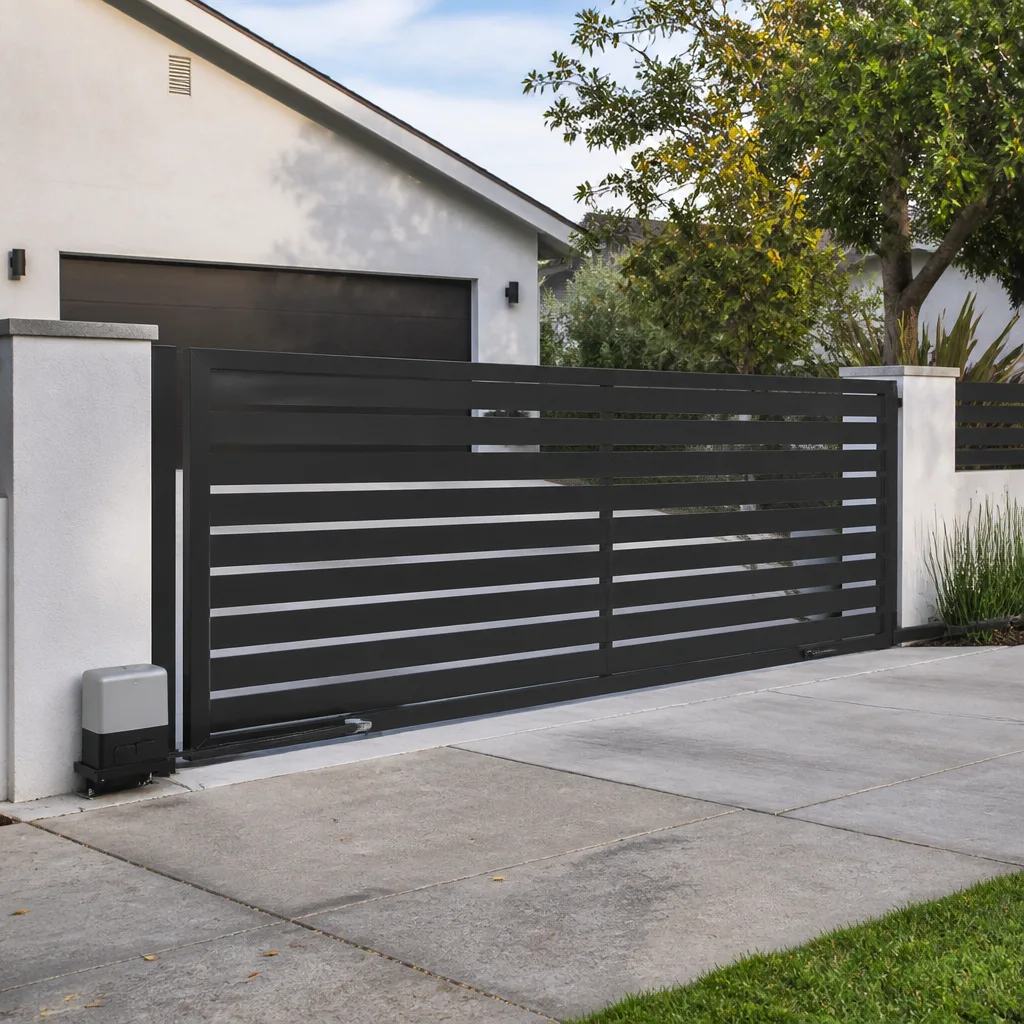 Sliding driveway gates
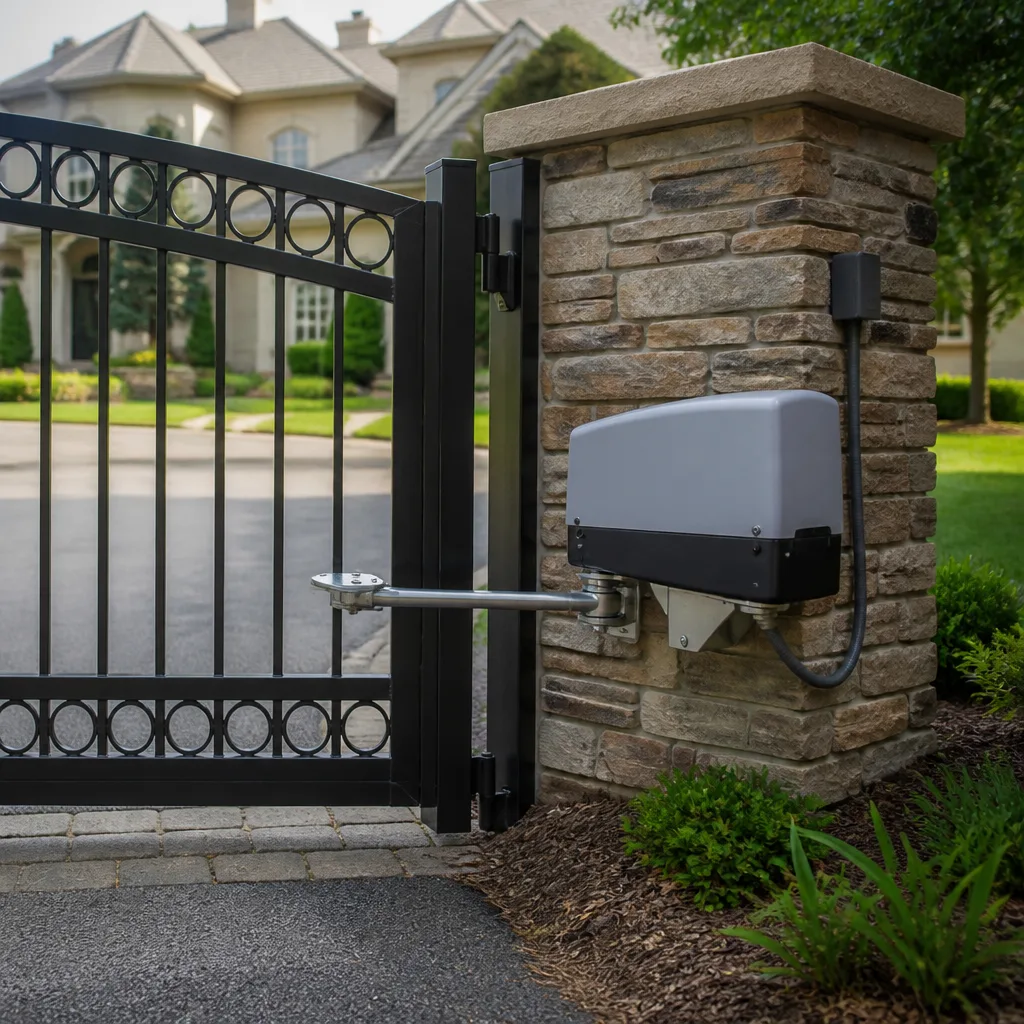 LiftMaster operators
Free on-site gate assessment - hinges, posts, and your LiftMaster or Nice gate operator checked before anything is quoted
The assessment is free and the quote is the invoice.
Get your free estimateSeasonal Gate Repair Care for Pasadena: Year-Round Homeowner’s Guide
Here’s something that surprises most Pasadena homeowners: the busiest stretch for gate repair calls in our city isn’t during the winter rainstorms. It’s six to eight weeks after the last storm clears, when the soil finally dries out and contracts, shifting gate posts just enough to throw alignment out of spec. The gate that worked fine through February suddenly binds, scrapes, or refuses to close in April. This guide maps gate care to Pasadena’s actual weather patterns: wet-expand-dry-contract cycles, June Gloom humidity, July-to-October heat, and the Santa Ana winds that arrive in the fall. You’ll learn what to check each month, what to leave alone, and when a phone call beats a wrench.
Styles & brands we work with
Quick Answer
Seasonal gate care in Pasadena means aligning maintenance with the city’s wet-dry cycles rather than a traditional four-season calendar. Check gate alignment and post stability after winter rains dry out, clean and adjust sensors before and after Santa Ana wind season, and reduce opener strain during July-through-October heat by adjusting auto-close timers and force settings. Most homeowners can handle cleaning, lubrication, and visual checks themselves, but alignment corrections, spring work, and motor repairs should go to a professional.
Table of Contents
- Why Pasadena’s Climate Demands a Different Gate Care Calendar
- January through March: The Wet Season and What It Does to Gate Posts
- April and May: The Drying-Out Period When Alignment Fails
- June Gloom: Humidity, Condensation, and Gate Opener Electronics
- July through October: Heat, Motor Strain, and Opener Settings
- October through December: Santa Ana Winds and Sensor Alignment
- The Soil Moisture Test: A No-Tool Check for Post Movement
- Protecting Your Gate’s Finish from Pasadena’s UV Intensity
- Common Mistakes to Avoid
- When to Call a Professional
- Frequently Asked Questions
- The Bottom Line
Why Pasadena’s Climate Demands a Different Gate Care Calendar
Most gate care guides you’ll find online were written for a generic American homeowner: snow in winter, rain in spring, dry heat in summer. Pasadena doesn’t work that way. Our city sits in a Mediterranean climate zone where rain arrives in concentrated bursts between December and March, almost nothing falls from April through November, and the temperature swings by forty degrees between June Gloom mornings and September afternoons. Then come the Santa Anas, hot dry winds that blast down through the San Gabriel Mountains from October through December, carrying dust, leaves, and fine grit into every hinge, track, and sensor lens on your property.
The result is a gate that endures four distinct stress cycles each year. Rain saturates the clay-heavy soil around gate posts, causing it to expand. Dry months contract that same soil, and if the post has shifted even a quarter inch, the gate starts binding. Humidity from June Gloom condenses on control boards and wiring connections. Heat above 95 degrees makes gate motors work harder, especially openers with force settings calibrated for cooler weather. And Santa Ana wind gusts regularly exceed 50 mph in the foothill neighborhoods, pushing gates out of alignment and filling sensor paths with airborne debris. A maintenance schedule built around these real conditions, rather than a calendar from Ohio, is what keeps a Pasadena gate running for twenty years instead of eight.
Our Gate Repair in Pasadena work follows this local cycle closely. The calls we get in a given month tell you exactly what the climate is doing to gates across the city.
January through March: The Wet Season and What It Does to Gate Posts
Pasadena’s rainy season runs from roughly December through March, with the heaviest rainfall typically arriving in January and February. During an El Niño winter, like the ones we saw in 2016 and 2023, the city can receive more than double its average rainfall in a single season. All that water doesn’t just drain away; it saturates the ground around your gate posts, especially if your gate sits at the bottom of a slope or near a downspout. Clay soil expands when wet, and that expansion pushes against post footings in ways that don’t always reverse cleanly when the soil dries.
What to do during the wet season:
- Watch the gate-to-post gap. Stand at the latch side of your gate and look at the gap between the gate edge and the post. It should be even from top to bottom. If it’s visibly wider at the top or bottom after heavy rain, the post is moving.
- Clear drainage paths. Check that water isn’t pooling at the base of either gate post. A small trench or gravel channel directing water away from the post footing can prevent the freeze-thaw-style expansion cycles that loosen posts over time.
- Check the auto-close sensor after every heavy storm. Rain and wind knock debris into the photo-eye path, and a muddy sensor lens is the most common reason a gate starts reversing or refusing to close after a storm.
- Grease hinges and wheels after the rain stops. Water washes lubricant out of moving parts. A dry hinge grinding against a post accelerates wear quickly.
- Listen for new sounds. After a week of rain, operate the gate and listen. A grinding noise that wasn’t there in December usually means a bearing or wheel is failing and the wet weather exposed it.
If your gate starts sagging or scraping during the wet months, don’t assume it will fix itself when the soil dries. In our experience, a gate that drags in February usually drags worse in May. The underlying issue, a shifted post or a worn hinge, doesn’t reverse on its own. Addressing it early keeps a $200 alignment correction from becoming a $1,500 post reset.
For homes in the San Rafael Hills or along the Arroyo Seco, where slopes add lateral pressure to fence lines, post movement during wet winters is especially common. We see it every year.
If your gate was installed as part of an electric gate system, water intrusion around the motor housing is another wet-season concern. Check that the motor housing seal is intact and that no standing water accumulates beneath it. If the motor sits in a low spot, a few inches of gravel can make a real difference.
April and May: The Drying-Out Period When Alignment Fails
This is the season that catches people off guard. The rain has stopped, the weather is mild, and the gate suddenly stops closing all the way. Here’s what’s happening: the saturated soil around your gate posts is contracting as it dries. If the post shifted even slightly during the winter, the drying process doesn’t pull it back to its original position. Instead, the soil shrinks away from the footing, leaving the post settled in its new, misaligned spot. The gate that tolerated the shift while everything was soft and wet now binds against hard, dry soil.
April and May are when we see the highest volume of alignment-related repair calls in Pasadena. The pattern repeats every single year, and it’s predictable enough that we plan our spring staffing around it.
- Test the gate’s travel path in late April. Open the gate fully and watch the wheels (for a sliding gate) or the hinge movement (for a swing gate). Does it hesitate at any point? Does it scrape the ground or the post?
- Check the latch or lock alignment. If you have to lift or push the gate to get the lock to engage, the gate or post has shifted out of spec.
- Inspect the gap on both sides of the gate. Uneven gaps that appeared or worsened since March point to post movement, not a hinge problem.
- Look for new cracks in concrete or paving near the posts. Dry-season soil contraction often shows up as hairline cracks in the concrete collar around a post footing.
- Check the gate’s resting position. When closed, the gate should sit squarely against both stops. A gap on one side and contact on the other means the alignment is out.
If you find any of these signs, have the alignment checked before summer heat adds thermal expansion to the problem. A gate that binds in 75-degree weather will bind harder at 100 degrees, and that added friction puts strain on the motor and the gearbox. The cost of a spring alignment check is modest compared to replacing a burned-out gate motor in August.
June Gloom: Humidity, Condensation, and Gate Opener Electronics
June in Pasadena means overcast mornings, marine layer moisture, and humidity levels that hover in the 70 to 80 percent range before the sun burns through in the afternoon. For gate electronic systems, that daily cycle of cool damp air followed by warm dry air is harder on components than people realize. Condensation forms on circuit boards and wiring connectors overnight. Then the heat arrives, the moisture evaporates, and the cycle repeats the next morning. After enough cycles, corrosion starts building on electrical contacts, and the gate opener starts doing things it shouldn’t: intermittent operation, random reversals, or a keypad that works only when it feels like it.
What to check during June Gloom season:
- Look for condensation inside the opener housing. Open the cover (power off first) and check for water droplets or fogging on the control board. A small desiccant pack inside the housing can absorb ambient moisture, but persistent condensation points to a failed gasket or seal.
- Check the battery backup, if you have one. Many LiftMaster and Elite openers include a backup battery, and these degrade faster in humid conditions. A swollen battery case is a sign that it needs replacement.
- Test the keypad and remote range. Humidity-related corrosion on antenna connections tends to reduce remote range before it kills the signal entirely. If you’re standing closer to the gate than you used to for the remote to work, the electronics need attention.
- Inspect wiring connections for green corrosion. If you can safely see the low-voltage wiring at the opener, check for any green or white powdery buildup on the terminals.
Most control board corrosion issues start small and become expensive when ignored for a full season. Warden Gate Repair Pasadena’s factory-trained service covers LiftMaster, FAAC, BFT, Linear, Viking, Ghost Controls, DoorKing, Elite, and Mighty Mule openers, so if your opener brand matches any of those, we can diagnose the issue with the correct service documentation in hand.
July through October: Heat, Motor Strain, and Opener Settings
Pasadena regularly sees daytime highs above 95 degrees from July through early October, and the heat wave stretches of 2020 and 2024 both pushed past 110. Gate motors are usually rated for operation up to a specific temperature ceiling, and when ambient heat pushes toward that ceiling, the motor’s internal thermal protection can trip, shutting the gate down until it cools. That’s the last thing you want on a hot afternoon when the gate is the only thing between your kids and the pool.
Heat also lengthens the metal in your gate itself. A dark-colored steel gate exposed to direct afternoon sun can expand enough to change the gap between the gate and the post by a visible amount. If your gate rubs at 4 p.m. but opens fine at 7 a.m., thermal expansion is the likely culprit, and the fix is often a small clearance adjustment rather than a new gate.
One thing most homeowners don’t realize is that the opener’s force settings and auto-close timer can be adjusted for hot-weather operation. On LiftMaster and Mighty Mule openers, the force setting controls how hard the motor pushes against resistance. In cooler weather, a higher force setting is often fine. But in July, when the gate has expanded and the track is hot, that higher force setting means the motor is working harder than it needs to, which shortens its life. Adjusting the force down slightly during summer (within safe operating parameters, so the gate still closes reliably) reduces motor strain. Likewise, lengthening the auto-close timer from 15 seconds to 30 seconds during summer gives a hot motor a little more recovery time between cycles.
These adjustments are straightforward for someone who knows the opener’s programming menu, but if you’re not comfortable working with electrical equipment, this is a good task to hand off. The dials and menu settings vary by model, and setting force too low creates a safety hazard if the gate can’t push closed against a light breeze.
Additional summer maintenance steps:
- Keep the track clear of debris. Dry leaves, seed pods, and dust accumulate faster in late summer. A dirty track adds rolling resistance, which makes the motor work harder.
- Lubricate wheels, hinges, and the track with the right product. Use a lubricant designed for gate hardware, not WD-40 (which is a solvent and can strip existing lubrication).
- Check the gate’s ground clearance. Dry soil contracts, and if your gate sits lower in August than it did in March, that’s another sign of post settlement.
- Watch for signs of overheating. If the gate stops mid-cycle during the hottest part of the day and works again after cooling down, the motor’s thermal protection is tripping. That’s a warning sign, not a failure, but repeated thermal trips shorten motor life.
For electric gate repair in Pasadena, summer is the season when we most often replace capacitors, thermal overloads, and burned-out motors on openers that have been running with too-high force settings for years. A quick settings adjustment in June has saved many Pasadena homeowners from a full motor replacement in September.
October through December: Santa Ana Winds and Sensor Alignment
Santa Ana winds arrive in Pasadena most reliably from October through December, although they can show up as early as September in some years. These are the hot, dry, downslope winds that blow from the northeast, often gusting between 40 and 70 mph in the foothill neighborhoods and through the canyons. For gate owners, Santa Anas create two problems: airborne debris that clogs tracks and sensor paths, and sustained lateral pressure that pushes gates out of alignment.
After any Santa Ana event, here’s what to check:
- Clear the sensor path first. The photo-eye sensors (the small units near the bottom of the gate opening) need an unobstructed line of sight to each other. Wind-blown leaves, palm fronds, and even dust buildup can block that line, causing the gate to reverse or refuse to close. Wipe both lenses with a dry cloth and make sure nothing is hanging in the path between them.
- Check sensor alignment. Wind pressure can shift the sensor brackets slightly, even if the gate itself doesn’t move. Both sensors should face each other directly. If one has twisted a few degrees, the gate will act as if something is in the way. Most sensors have a small indicator light that stays steady when aligned and blinks when not.
- Inspect the gate for new play or wobble. Hold the gate halfway open and push it gently from side to side. Movement at the hinge or wheel points that wasn’t there before the wind event means wind load has loosened something.
- Clear the track thoroughly. For sliding gates, remove every leaf, twig, and pebble from the track. A single palm frond wedged in the wrong spot can stop a gate from closing and trip the opener’s safety reverse.
- Test the full open-close cycle twice. Listen for new grinding, scraping, or hesitation. If everything sounds clean, the gate survived the Santa Anas. If not, schedule an inspection.
One important note on the human side of this season: during and immediately after strong wind events, Pasadena fire officials sometimes issue red flag warnings. A gate that won’t close during a red flag event isn’t just annoying; it can leave your property accessible exactly when fire risk is highest. If your gate fails during a wind event and you can’t resolve it with basic sensor cleaning, call a professional right away. Our Warden Gate Repair Pasadena home service line is answered by a live person 24/7, not a voicemail tree, so you’ll reach someone who can help when you need it.
The Soil Moisture Test: A No-Tool Check for Post Movement
You don’t need a level, a measuring tape, or any specialized equipment to detect the early signs of gate post movement. The soil moisture test is something we teach every Pasadena homeowner who calls us about a gate that’s “acting strange.” It works because the clay-heavy soils in most of Pasadena, especially in areas like Bungalow Heaven, Madison Heights, and the foothill neighborhoods, expand and contract dramatically with moisture content. That movement shows up at the surface first.
- Wait for a dry spell. This test works best after at least five days without rain, which in Pasadena is most of the year. You want the soil to be in its contracted state.
- Stand next to each gate post and look at the soil contact. In contracted (dry) soil, you’ll often see a visible gap between the soil surface and the post footing or the concrete collar around it. A gap wider than about a quarter inch means the soil has pulled away, which allows the post to shift.
- Push gently against the top of each post with one hand. Modify this step if the gate is heavy or if you have any shoulder or back concerns; the goal is to feel for movement, not to force anything. A properly set post won’t move at all. Any perceptible movement, even an eighth of an inch, means the footing is compromised.
- Compare the two posts. If one post moves and the other doesn’t, that’s your problem. The gate’s weight is now hanging unevenly, and every open-close cycle is working the moving post looser.
- Check again after the next heavy rain. If the gap closes when the soil re-expands, that confirms the soil is driving the post movement. The post may seem stable in the wet season, but the dry-season shift will return, and each cycle loosens the post further.
If your posts pass this test, great. Run it once in spring and once in fall. If they don’t pass, the fix usually involves resetting the post in new concrete or adding a larger footing, and that’s a job for a professional gate company, not a weekend project. The longer a shifting post stays in service, the more damage it does to the gate, hinges, wheels, and opener, all of which are more expensive to replace than the post itself.
Protecting Your Gate’s Finish from Pasadena’s UV Intensity
Pasadena averages about 280 sunny days per year, and the sun here is intense: our elevation and clear-air days mean UV levels run higher than in coastal Los Angeles. For a wrought iron or powder-coated steel gate, that constant UV exposure is the slow killer of finishes. The damage doesn’t show up as dramatic peeling like you’d see in a humid climate. Instead, the finish fades, chalks, and eventually develops micro-cracks that let moisture reach the underlying metal. In a city where the air is dry most of the year but wet for two months solid, those micro-cracks are where rust begins.
Here’s how to protect your gate’s finish without stripping or damaging the factory coating:
- Wash it twice a year, in spring and fall. Use car wash soap (it’s pH-neutral and won’t strip protective coatings) and a soft brush. Rinse thoroughly. This removes the fine dust and pollution film that accelerates finish breakdown.
- Dry it completely after washing. Water left in seams and scrollwork evaporates quickly in Pasadena’s dry air, but the minerals in our hard water leave spots that can etch the finish over time.
- Wax it once a year, in October. A liquid car wax or metal wax applied to a clean, dry gate adds a UV-protective layer that sacrificial to the sun instead of your powder coat. This is particularly important for south-facing and west-facing gates that get full afternoon sun.
- Address chips and scratches immediately. A touch-up paint matched to your original finish color, available from most paint and hardware stores, seals the chip before moisture and oxygen can start the corrosion process. A $15 touch-up pen prevents a $600 rust-remediation sandblast-and-recoat job.
- Inspect the bottom rail and hinge welds every fall. These are the first places rust shows up on a metal gate in Pasadena. Rust at a hinge weld compromises the structure of the gate itself, not just its appearance.
For powder-coated gates specifically: do not use abrasive cleaners, steel wool, or solvent-based paint removers. The factory finish is a polymer that melts and fuses to the metal, and once it’s damaged, it can’t be “touched up” the way paint can. Abrasive cleaning creates microscopic scratches that let UV radiation reach the bond between coating and metal, which is how powder coat failure starts in Pasadena’s climate.
If you have a wooden gate, which Pasadena still has plenty of in its older neighborhoods, the moisture-cycling problem reverses. Wood expands in summer’s relative dry heat and contracts during the rainy season. A wood gate that scrapes in February and swings free in August is telling you it’s absorbing moisture and swelling. You can’t seal your way out of that entirely, but keeping the bottom edge of a wood gate at least two inches above ground level and maintaining the sealant every two years keeps moisture cycling from destroying the wood.
Common Mistakes to Avoid
- Ignoring a gate that “only scrapes a little.” A slight scrape in a swinging gate means the gate or post has shifted. That scrape is applying off-axis force to the hinges every time the gate moves, and the hinges are wearing faster than they should. The scrape is the symptom; the repair gets more expensive the longer you wait.
- Using the wrong lubricant. WD-40 and similar spray lubricants are designed to displace moisture, not to lubricate under load. They wash away existing grease and leave moving parts drier than before. Use a lithium-based grease or a product specifically designed for gate hardware.
- Adjusting opener force settings without checking the manual. Setting force too high creates a safety hazard, and setting it too low creates an unreliable gate. On LiftMaster, Mighty Mule, FAAC, and Elite openers, the correct procedure varies by model. A wrong setting can also void the manufacturer’s warranty.
- Treating Santa Ana damage as a cosmetic issue. A gate that survives a windstorm with a new wobble or a bent hinge wasn’t properly secured. Wind loads that twist a gate out of alignment can also crack welds and bend tracks in ways that aren’t visible from the street. If the gate moves differently after the wind, it needs inspection.
- Delaying post repair because “the gate still works.” A moving post is doing incremental damage every single time the gate opens and closes. The gate may work for months, but the hinges, wheels, opener, and track are all absorbing that movement. Replacing those components costs far more than resetting the post early.
- Forgetting that gate electronics are outdoor electronics. Control boards, sensor wires, and battery backups all degrade faster in Pasadena’s combination of dry heat and wet winters. If your opener is more than eight years old and starting to behave erratically, a component-level repair may extend its life, but only if you address it before total failure.
- Skipping the fall sensor check. A gate opener that reverses for no apparent reason is almost always a sensor problem, not a motor problem. The sensor is the single most common point of failure on any electric gate in Pasadena, and a five-minute visual check each fall prevents most of those calls.
When to Call a Professional
Some gate maintenance tasks are appropriate for a careful homeowner, and some are not. Here’s the line: anything involving post foundations, tension springs, gearbox internals, or electrical wiring should go to a trained technician. Gates are heavy, moving structures, and the energy stored in a tensioned spring or a moving gate panel is enough to cause serious injury if something fails unexpectedly. If your gate has shifted posts, a cracked weld, a grinding gearbox, or an opener that trips its breaker, stop troubleshooting and call someone who does this work every day.
Warden Gate Repair Pasadena offers free estimates in Pasadena. Call (626) 657-5425 and you’ll get a written price before any work starts, plus the 365-Day Done Right Promise on every repair: if it isn’t right, we come back and make it right, free of charge.
Frequently Asked Questions
A residential gate in Pasadena should get a basic maintenance check twice a year, once in spring after the rainy season and once in fall before Santa Ana season. Commercial gates or high-use residential gates may need quarterly service. The spring check focuses on alignment and post stability after the soil dries; the fall check focuses on sensors, tracks, and opener settings before the wind and heat cycles change.
That’s thermal expansion. Metal gates expand in direct afternoon sun, especially dark-finished steel gates, and the expansion reduces the gap between the gate and the post. If your gate swings or slides free in the morning but scrapes after 3 p.m. in the summer, the alignment was borderline to begin with. The fix is a clearance adjustment, which is a straightforward repair for a gate professional. Call (626) 657-5425 and Warden Gate Repair Pasadena will quote the adjustment before any work starts.
Most gate repairs in Pasadena fall somewhere between $150 and $800 depending on the problem. Sensor realignment typically runs $150 to $250. Hinge replacements are usually $200 to $450 per hinge. Post resets run $600 to $1,500 depending on footing size and accessibility. Gate motor replacement runs $800 to $2,500 depending on the opener model and power requirements. Warden Gate Repair Pasadena gives every customer a written price before any work begins, so you’ll know the cost before you approve the repair.
Yes. Warden Gate Repair Pasadena’s phones are answered by a live person 24 hours a day, 7 days a week. If your gate is stuck open, stuck closed, or posing a safety risk, call (626) 657-5425 and we’ll dispatch a technician as quickly as possible. Every technician arrives with a name and photo sent to you beforehand, so you’ll know exactly who is at your door.
Warden Gate Repair Pasadena is factory-trained and authorized to service LiftMaster, FAAC, BFT, Linear, Viking, Ghost Controls, DoorKing, Elite, and Mighty Mule openers. If your opener is one of these brands, we can diagnose and repair it with the correct service documentation and parts. If your opener is a different brand, call and ask; we’ll tell you honestly whether we’re the right shop for the job.
Yes, every repair Warden Gate Repair Pasadena completes is covered by the 365-Day Done Right Promise. If the repair fails within one year, we return and make it right with no charge for the second visit. The promise is written into every service record. It’s part of why the company was founded in 2008 with a straightforward idea: a gate repair company should guarantee its work in writing, not just say it will.
The Bottom Line
Pasadena’s gates live in a climate that cycles through rain-soaked expansion, dry-season contraction, June Gloom humidity, brutal summer heat, and Santa Ana wind gusts. A maintenance schedule built around those real conditions, checking posts after the winter rains, cleaning sensors after every wind event, adjusting opener settings for summer heat, and touch-up-painting finishes before UV damage spreads, will extend the life of your gate by years. Most of the checks in this guide take less than fifteen minutes. The ones that need professional help are specific, identifiable, and cheaper to fix early than late. For any repair, alignment adjustment, or opener service in Pasadena, call Warden Gate Repair Pasadena at (626) 657-5425 for a free estimate and a written price before work starts.
Written by Cole Rafferty, Owner at Warden Gate Repair Pasadena, serving Pasadena since 2008.
See the difference
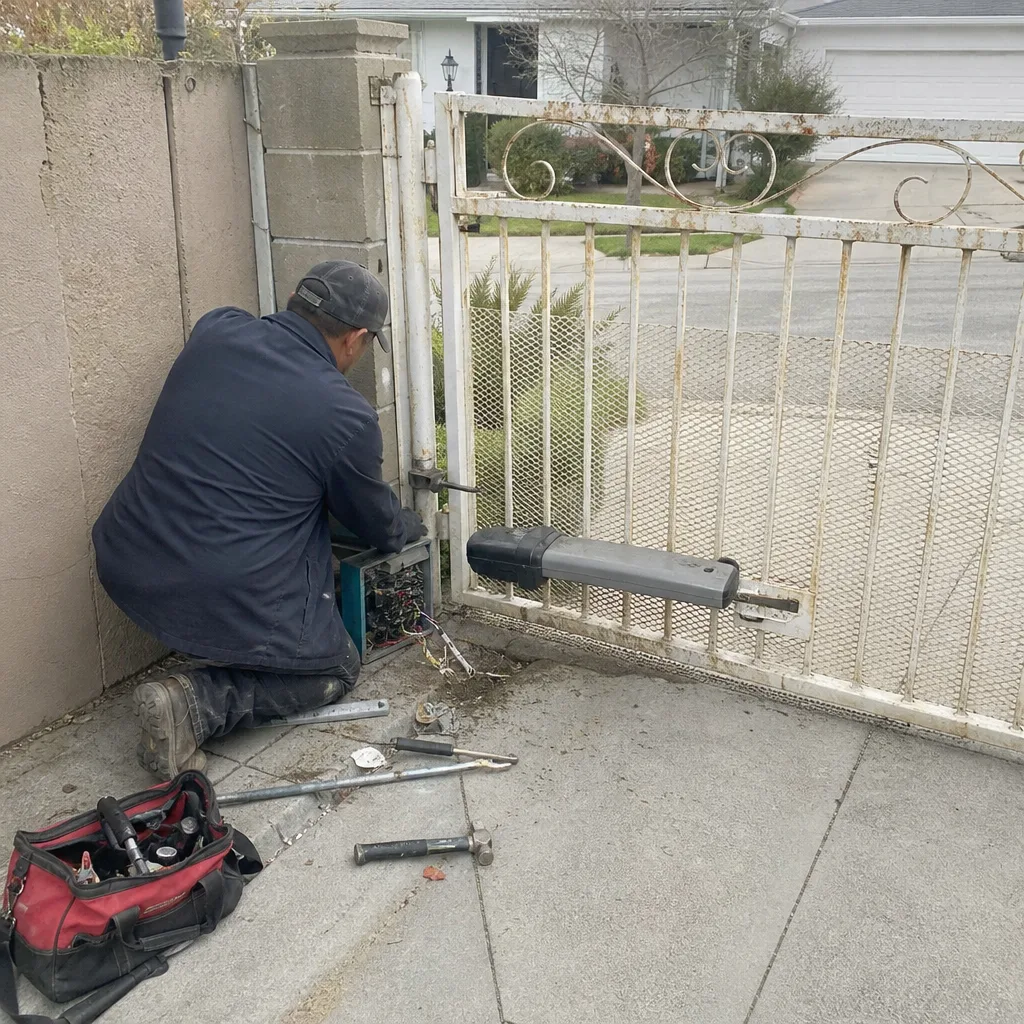 Before
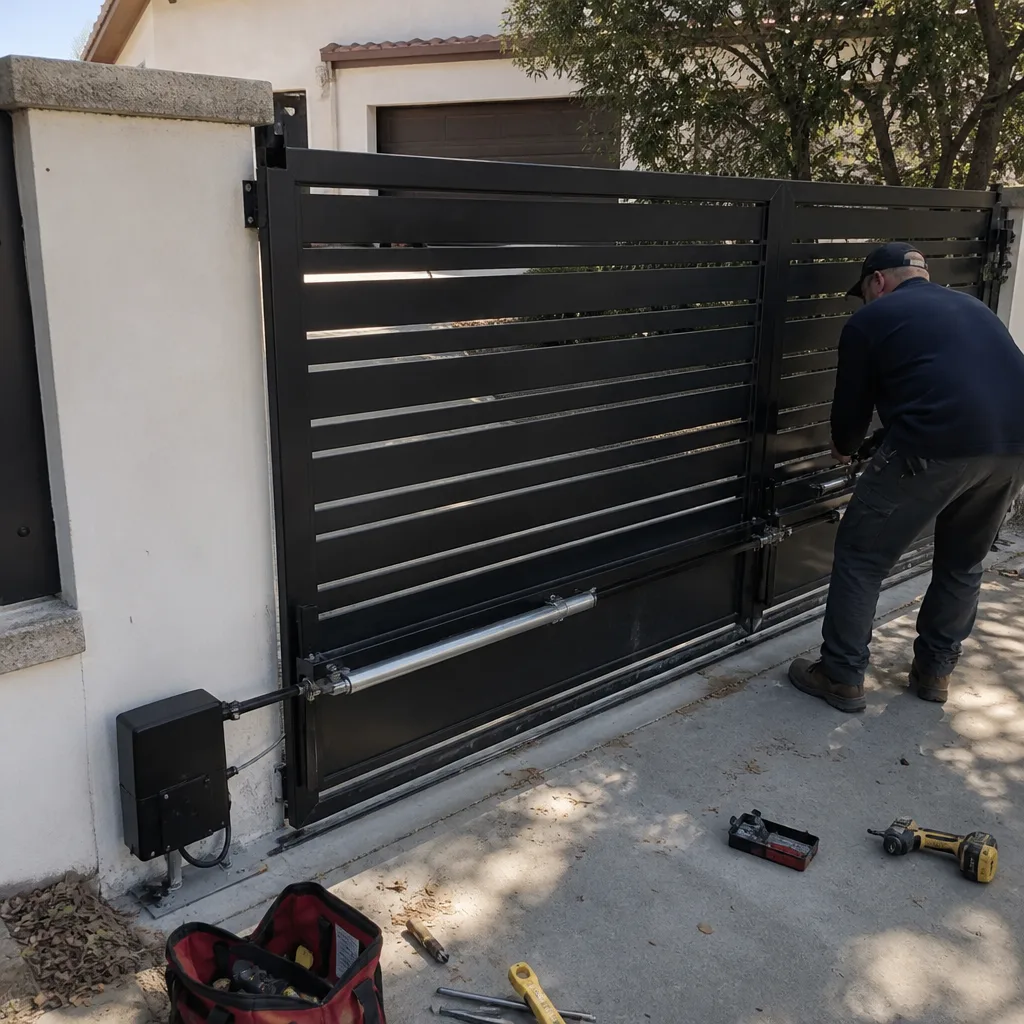 After
After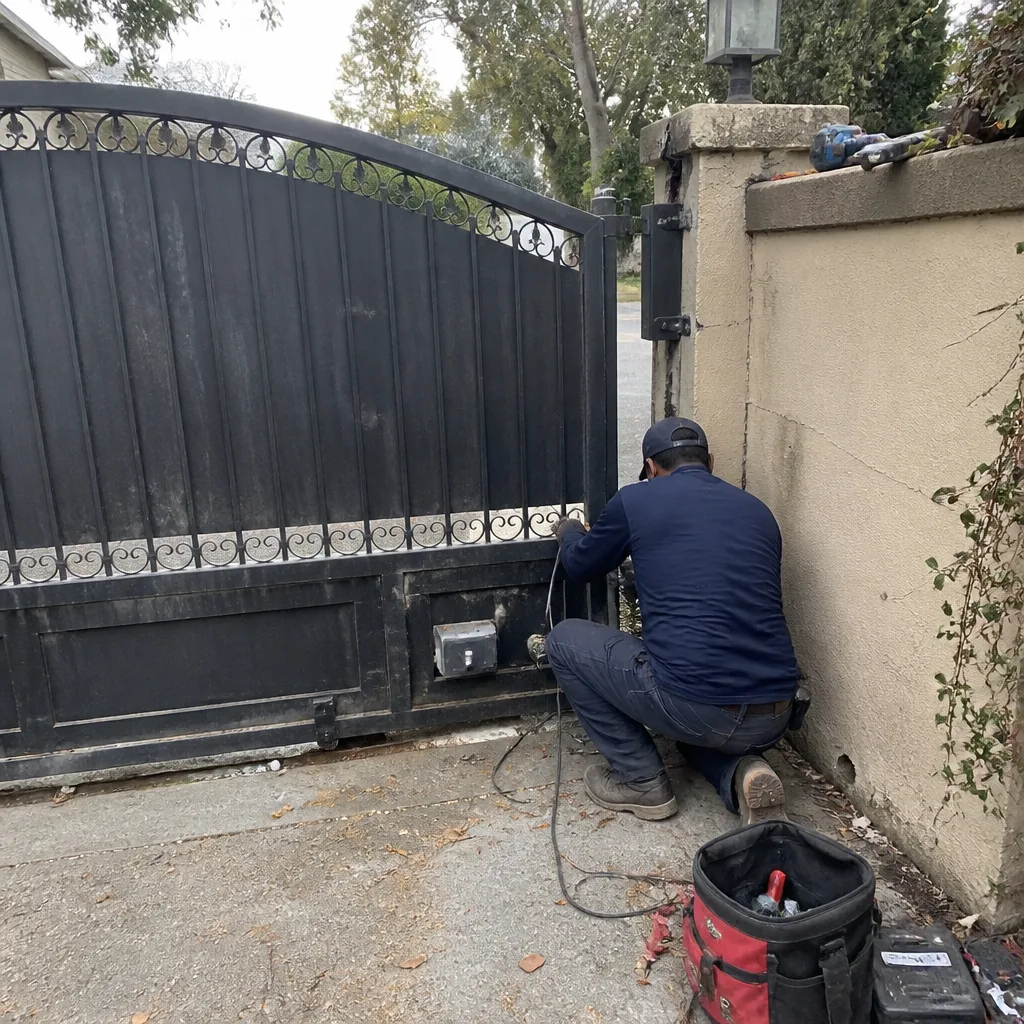 Before
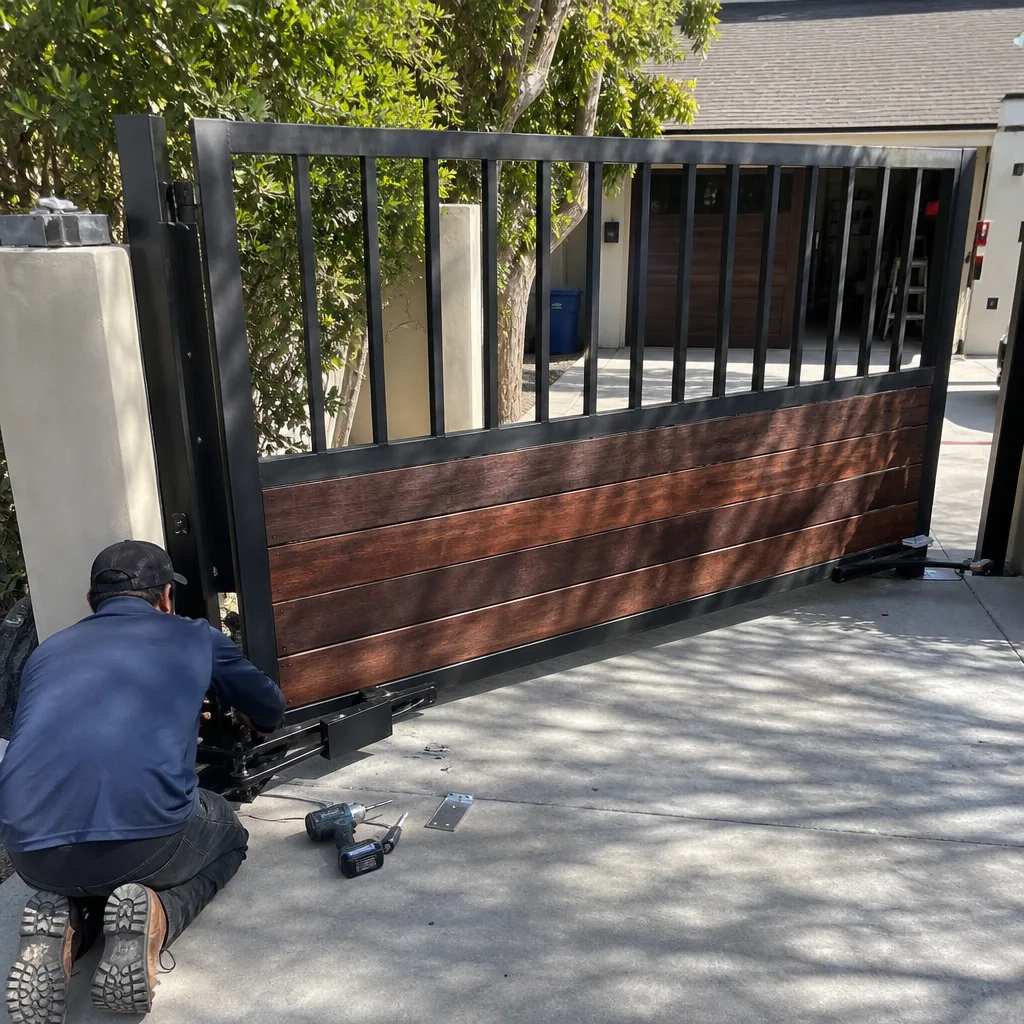 After
After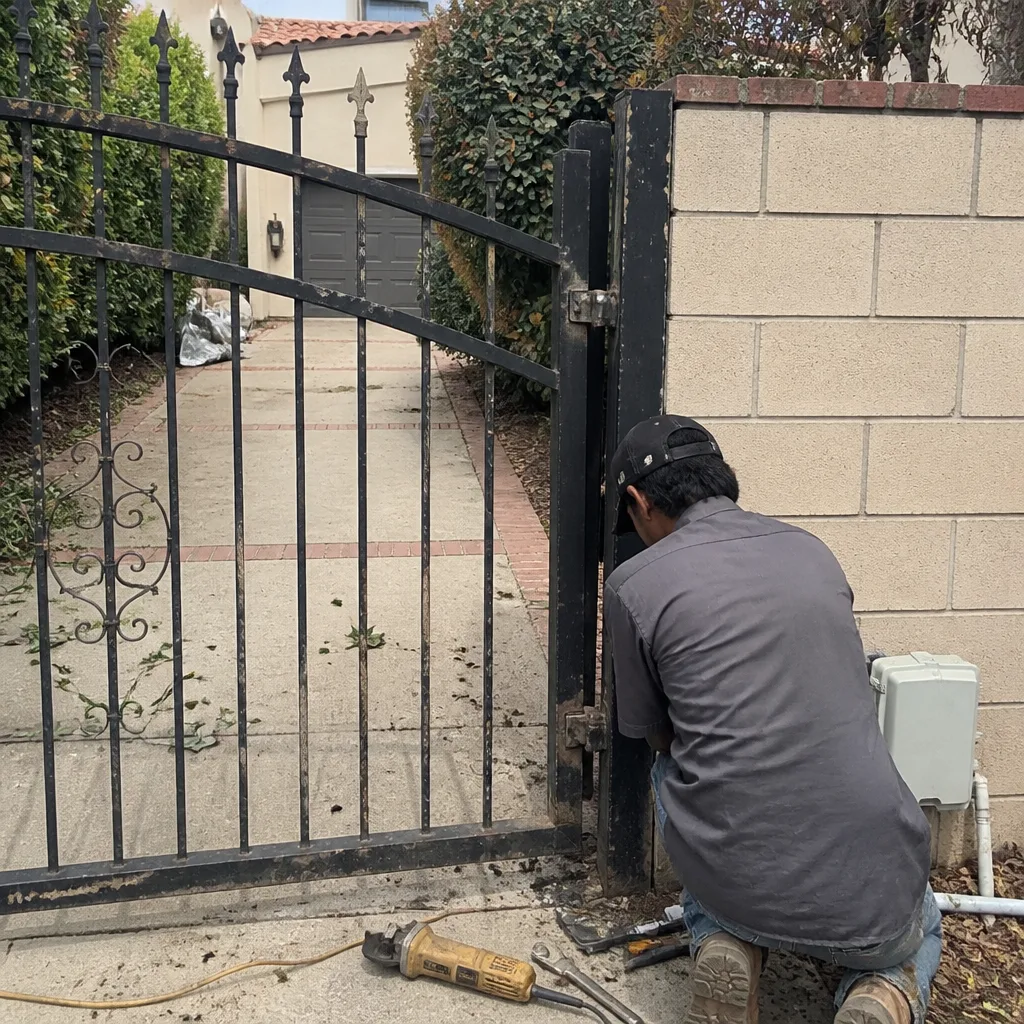 Before
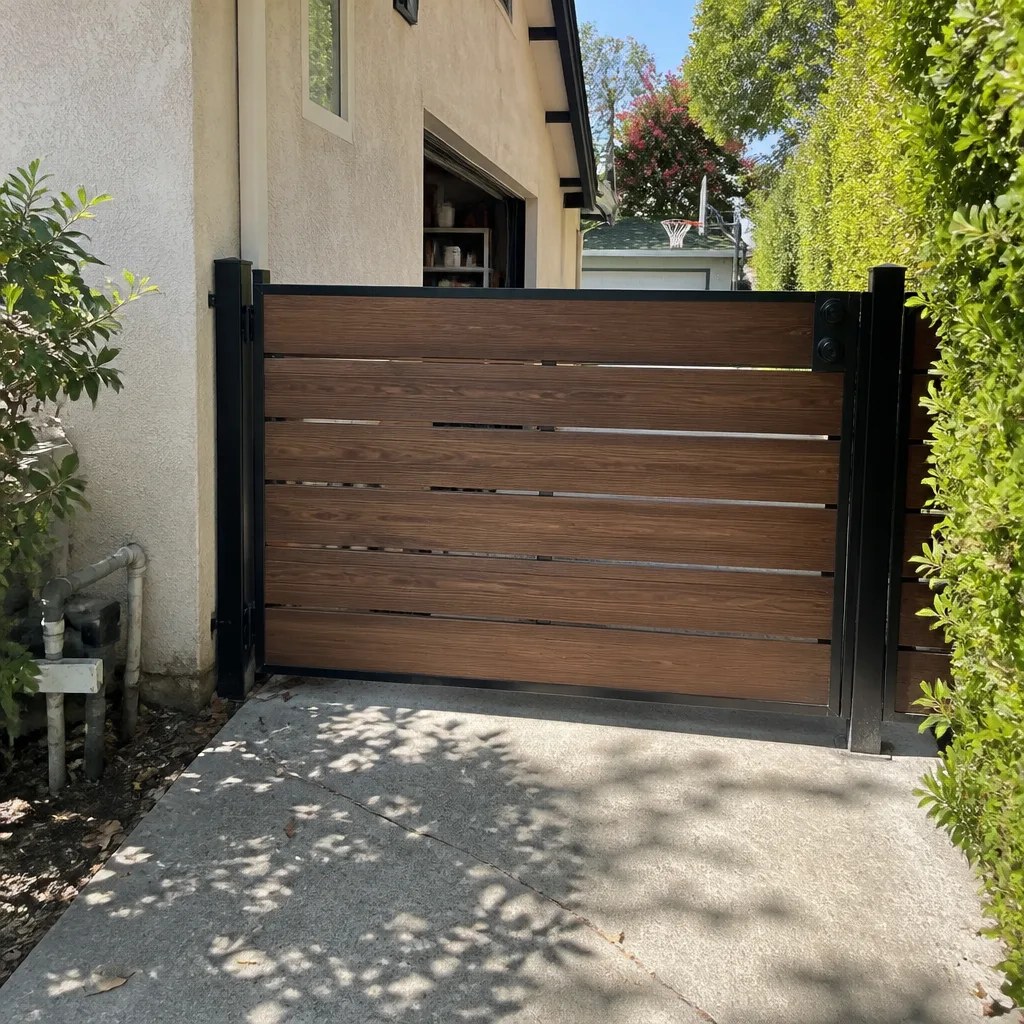 After
After